



NEWYou can now listen to Fox News articles!
A railway project has opened an unexpected window into Roman Britain after archaeologists uncovered a rare coin and other artifacts dating back nearly 2,000 years.
The discoveries, made in Bedfordshire and Cambridgeshire in the United Kingdom, were announced by East West Rail on July 1.
Construction workers are currently restoring and building rail links between Oxford and Cambridge, and as part of that work, archaeologists are excavating trenches across southern England.
‘SIGNIFICANT’ EARLY CHRISTIAN CHURCH EMERGES BENEATH FORMER FISH MARKET IN ANCIENT CITY
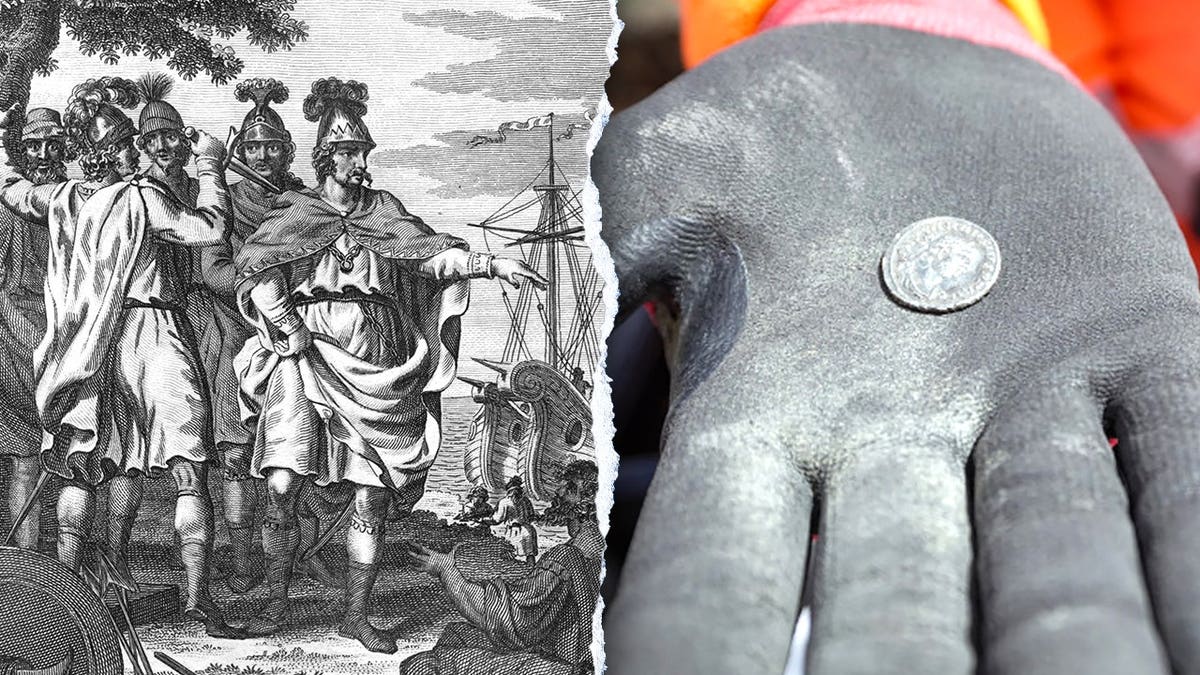
One of the discoveries was a coin dating back roughly 1,740 years.
The artifact carries the name of Roman Emperor Carausius, a naval commander who was in charge of a Roman fleet based in the English Channel.

Archaeologists working on a rail project uncovered Roman-era artifacts, including a coin linked to Emperor Carausius, during excavations in southern England. (East West Rail)
Pictures released by East West Rail show the Roman coin appearing in excellent condition after spending centuries underground.
Archaeologists expected to uncover ancient remains along the route, but there have been “a few surprises” that geophysical surveys did not initially detect, said Mike Court, historic environment lead at East West Rail.
TREASURE HUNTERS RECOVER RARE SILVER BAR FROM LEGENDARY SHIPWRECK OFF FLORIDA KEYS
“Geophysical survey doesn’t generally show finds, cremations or burials, so these are often unexpected when they appear in the trenches,” Court told Fox News Digital.
“Despite being armed with all of that knowledge going into the trenching, it is still exciting when discoveries are made — and so far, after over 1,000 trenches, we are starting to get some really interesting results.”
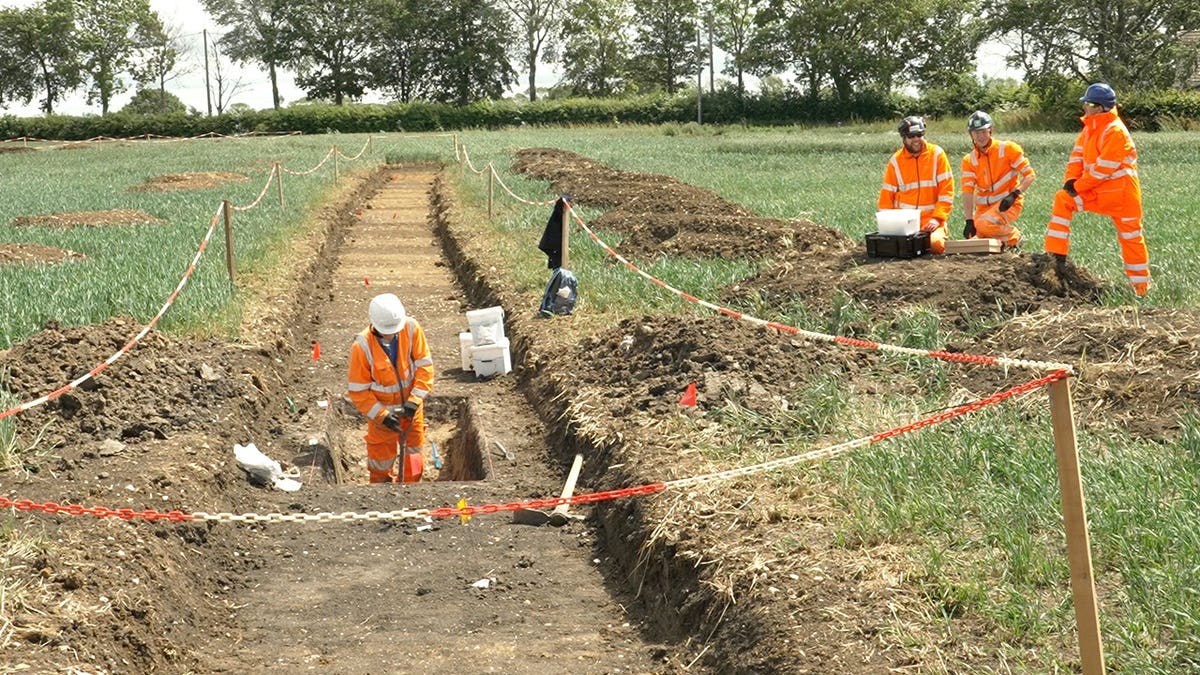
Construction work between Oxford and Cambridge is giving archaeologists a rare opportunity to study centuries of buried history. (East West Rail)
Court said the coins were discovered alongside evidence of Roman settlement and farming activity, rather than as isolated finds.
“These sites comprise numerous features, such as pits, ditches and postholes, cut into the natural ground,” he said.
HIDDEN UNDERGROUND CHAMBER REVEALED BENEATH HOME OF LEGENDARY ROMAN EMPEROR
“The fills of these features may contain pottery, which help us date the features and the site.”
The fills are “where we often find the coins through metal detecting,” he added.
“Maybe the most compelling thing about these objects is not their association with emperors and historic events, but [their] connection to ordinary people.”
What makes the coin “particularly interesting,” Court said, is that it bears the name of Roman Emperor Carausius. That provides valuable dating evidence for archaeologists.
Court said the excavations uncovered evidence spanning hundreds of years of history, with finds dating from the Iron Age through the Roman period.
CLICK HERE TO SIGN UP FOR OUR LIFESTYLE NEWSLETTER
“We know from other projects nearby that this part of Britain has a rich archaeological landscape, and we weren’t disappointed,” he said.
“By the time we [are] finished, we expect to find archaeology from most, if not all, periods of British history and prehistory.”
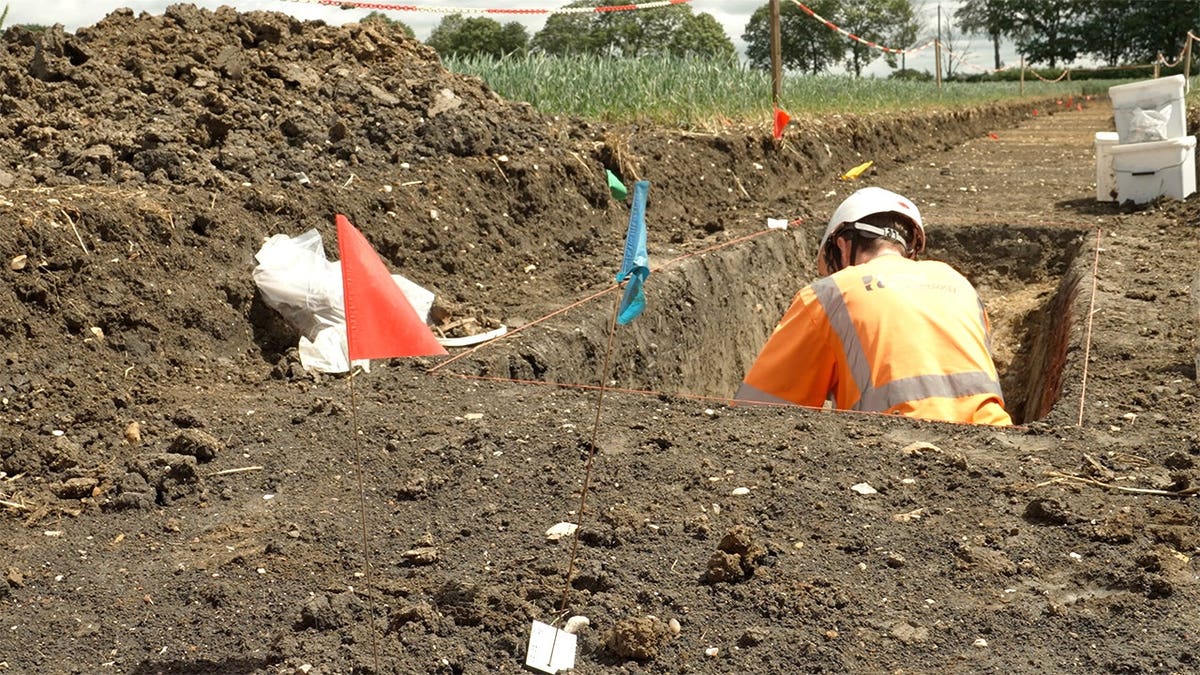
Archaeologists have excavated more than 1,000 trenches as part of the East West Rail project’s ongoing evaluation. (East West Rail)
All the artifacts provide a rare, tangible link to the people who lived at the site millennia ago, Court noted.
CLICK HERE FOR MORE LIFESTYLE NEWS
“Maybe the most compelling thing about these objects is not their association with emperors and historic events, but [their] connection to ordinary people,” he said.
“Each coin was once carried by an individual living in Roman Britain. … Through chance and circumstance, the coin remained buried until its rediscovery by East West Rail’s archaeological survey team centuries later.”
TEST YOURSELF WITH OUR LATEST LIFESTYLE QUIZ
With plans to dig around 6,000 trenches, Court added that archaeologists expect to uncover many more significant discoveries along the route.
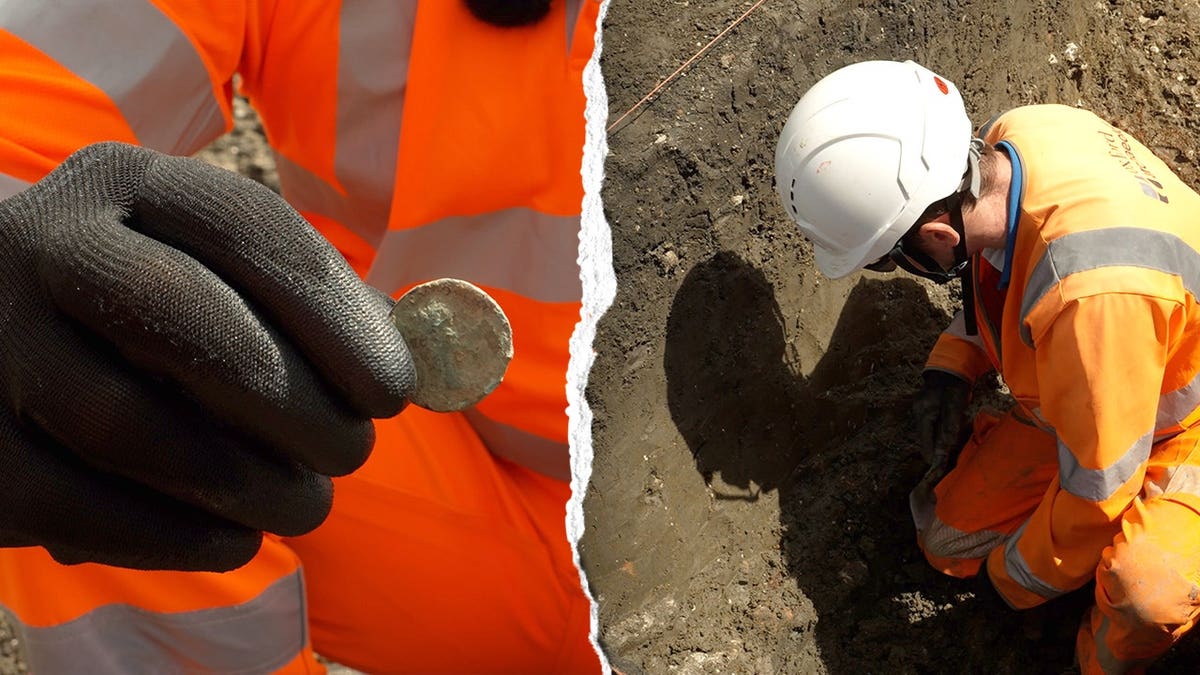
With plans to dig some 6,000 trenches, archaeologists expect to uncover many more significant discoveries along the route. (East West Rail)
“We are confident that we’ll uncover additional major sites over the next two years of our trenching program,” he said.
CLICK HERE TO DOWNLOAD THE FOX NEWS APP
“As we progress through the evaluation, we will get a better understanding of the sites we’ve excavated and their importance.”


